
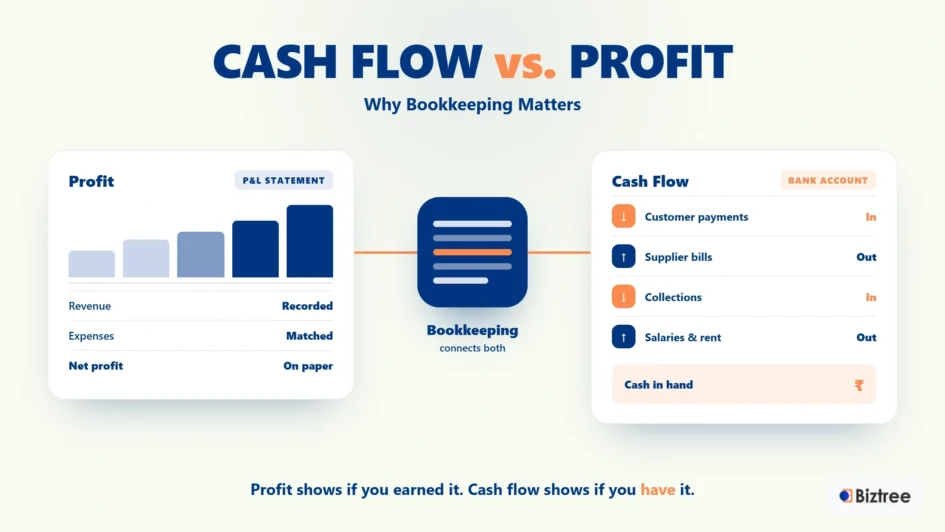
In business, it’s exciting to focus on sales and see your profits grow. Looking at your profit and loss statement might make you feel successful. But profit is not the only thing that matters. Even a profitable business can fail without proper cash flow management. That’s why it’s important to understand the difference between cash flow and profit — and this is where good bookkeeping helps. For new entrepreneurs, this knowledge is key to long-term success. Using accounting services for startup businesses can make managing this much easier and give you a strong advantage.
Cash Flow vs. Profit: What Is the Difference?
Cash flow and profit measure two different aspects of business performance. Profit is the amount remaining after expenses are deducted from revenue, while cash flow tracks the actual money entering and leaving a business. A business can report a profit but still struggle to pay its bills if customers have not paid their invoices. Tracking both helps business owners understand profitability, manage working capital, and plan expenses more effectively.
What is Profit? The Simple Story Your Income Statement Tells
Profit is the money your business keeps after paying all its costs. People also call it the “bottom line.” It shows how well your business is running and if your prices cover your expenses.
- The Simple Formula: Revenue – Expenses = Profit. That’s it! If your income is higher than your costs, you have profit.
- Why It Matters: If you make profit regularly, it means your business idea works. You’re selling your product or service for more than what it costs you.
- For the Future: Profit is very important if you want to grow, get investors, or take business loans. It proves your business is healthy in the long run.
- Accrual Method: Most businesses follow accrual accounting. This means income and expenses are recorded when they happen, not only when money moves in or out of the bank. That’s why sometimes your bank balance and profit statement don’t match. For this reason, many owners choose accounting services for small business, accounting services in Pune, or even online accounting services to avoid confusion.
What is Cash Flow? The Reality of Your Bank Account
Cash flow is the actual money moving in and out of your business. If more money is coming in than going out, you have positive cash flow. If more is going out, it’s negative cash flow. Simply put, cash flow is like the lifeblood of your business—without it, you can’t pay salaries, suppliers, or rent, even if your business looks profitable on paper.
- Real-Time Picture: Cash flow shows how much money you actually have in your bank to handle daily expenses.
- Business Health: Good cash flow means you can pay bills on time and also have funds ready to grab new opportunities.
- Timing Matters: Sometimes, you may make a big sale and record profit, but if the customer pays you after 90 days, you won’t have that cash in hand immediately. Meanwhile, your bills won’t wait. That’s a common cash flow issue.
- Cash Method: Some small businesses use cash accounting, where money is recorded only when it enters or leaves the bank. This shows cash flow clearly but may not be perfect for long-term planning. Many business owners use online accounting services to decide the right method.
Why the Difference Matters: Profitable but Cash-Poor Business
Sometimes a business shows profit on paper but still struggles because there isn’t enough actual cash in the bank. This is a common mistake many entrepreneurs make, and it can even shut down a growing business. Here’s why cash flow matters as much as profit:
- Paying the Bills: Profit looks good in reports, but you can’t pay salaries or suppliers with numbers on paper. You need real cash in your account. If most of your money is stuck in unpaid invoices, your business can quickly get into trouble.
- Growth and Investment: To expand your business—like buying equipment, hiring staff, or running ads—you need cash. Even if your business is profitable, poor cash flow can stop your growth.
- Unexpected Costs: Emergencies like equipment failure or sudden market changes demand instant cash. Without strong cash flow, these surprises can hurt your business badly.
- Smart Decisions: When you track both profit and cash flow, you can make better choices. You’ll know when it’s safe to expand and when it’s smarter to focus on collecting payments. Many businesses rely on accounting services in Pune to get this clarity.
Example: How a Profitable Business Can Run Out of Cash
Suppose a business earns ₹5 lakh in revenue and incurs ₹4 lakh in expenses during a month, generating a profit of ₹1 lakh. However, if customers have paid only ₹2 lakh of the revenue and the business has already paid ₹3 lakh in expenses, its cash position can be tight despite the reported profit. The exact cash balance also depends on opening cash, other receipts, and payments. This is why businesses need to track unpaid invoices, upcoming expenses, and cash flow forecasts alongside their profit and loss statements.
How Professional Bookkeeping Helps Your Business
Bookkeeping is more than just writing down income and expenses. A good bookkeeper helps you understand your profit and your cash flow, so you know the real money situation of your business.
- Clear Records: A bookkeeper makes sure your income statement, balance sheet, and cash flow report are always correct. The cash flow report shows the real money moving in and out of your business.
- Planning Ahead: With proper bookkeeping, you can guess your future cash flow. This helps you prepare for expenses and avoid running short of money.
- Easy with Technology: Modern tools make things simple. For example, tally to zoho books migration helps you move to better software. Many experts provide zoho accounting services in Pune to make this easy.
- Helpful Advice: A bookkeeper can also guide you on how to manage money better, like improving payments from customers or reducing costs. This is why accounting services for small business, accounting services in Pune, and online accounting services are so useful. If you’re new, choosing accounting services for startup helps you build a strong base from the beginning.
How Can Bookkeeping Improve Cash Flow Management?
Accurate bookkeeping helps businesses monitor accounts receivable, accounts payable, bank balances, and recurring expenses. Regular bank reconciliation and cash flow forecasting can highlight delayed customer payments and upcoming cash shortages before they become serious problems. By reviewing these records alongside the profit and loss statement, business owners can make informed decisions about spending, collections, and future investments.
Conclusion
Profit shows if your business is earning money, but only profit is not enough. Cash flow (the money coming in and going out daily) is what keeps the business running smoothly.
To handle this properly, many people take help from accounting services in Pune, accounting services for small business, or even online accounting services.
If you have a new company, accounting services for startup can give you the right guidance from day one. Nowadays, tools like Zoho accounting services in Pune make work very easy. And if you are using Tally, experts can also help with tally to zoho books migration in a smooth way.
With the right accounting help, your business will not only make profit but also stay strong and grow in the future.
Frequently Asked Questions
A profitable business can face cash shortages when customers pay late, expenses fall due before payments arrive, or cash is tied up in inventory and other assets.
Profit is generally calculated as revenue minus expenses. Cash flow is calculated by comparing cash received with cash paid over a period, while the ending cash balance also includes the opening balance.
The cash flow statement shows cash generated and used by operating, investing, and financing activities. A cash flow forecast estimates expected future receipts and payments.
Businesses should monitor cash balances regularly and update their cash flow forecasts weekly or monthly, depending on transaction volume, payment cycles, and financial risk.
Yes. Accurate bookkeeping helps businesses track unpaid invoices, upcoming bills, bank balances, and spending patterns so they can identify potential cash shortages earlier.



 Bookkeeping & Accounting
 Payroll Processing & Compliances
 Tax Compliance & Solutions
 Zoho Finance Services
 Virtual CFO Services
Leave a Reply